What the Paris protests have in common with coaching leadership
During the Paris demonstrations, I saw fires, police and peaceful protesters. A personal reflection on attention, being present and supporting people at work.
Prefer listening?
6 minutesEnglish male voice Michael · Kokoro
Synthetic voice, not Simon’s own voice.
Lees dit artikel in het Nederlands
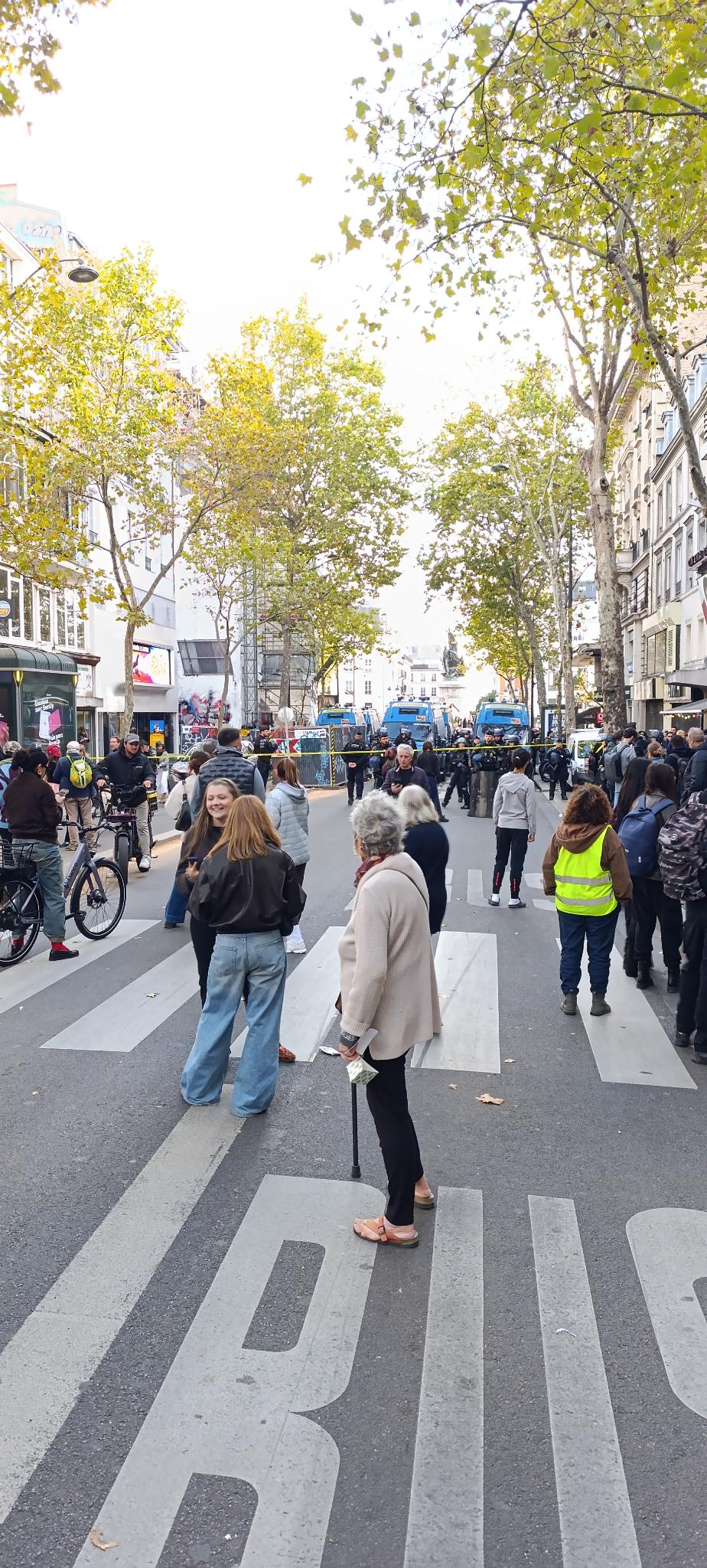
I have been to Paris many times. I can spend hours walking around, looking up at the buildings and wondering why I do not visit more often. On Saturday 17 October 2026, I was there with my wife. We knew demonstrations were taking place. We had not expected them to escalate like this.
Along the routes we walked, we saw fires, barricades and police. I got tear gas in my eyes. At a police cordon, we had to show evidence that we were staying in a hotel before we could continue.
This was far from the weekend we had imagined. It was frightening. I also kept observing what was happening. There were peaceful protesters too: people trying to make a point without taking part in the violence.
That made it a compelling experience as well, however uncomfortable those two descriptions may sound together.
What immediately gets noticed
Fire and smoke demand attention, especially when you are nearby. You want to know where you can go and whether you can continue safely.
The violence was real, as were its consequences. Dutch broadcaster NOS reported on the unrest and police response the following day. It also reported that the vast majority of the protests had been peaceful.
That distinction fits what I saw. The fires are part of my experience. So are the peaceful people on the streets. If I showed only the photographs of flames, you would get an incomplete picture of our weekend.

I recognise that pull on our attention at work
Thinking about it afterwards, I recognised something about how we allocate attention. Urgent or dramatic events pull us towards them. They often require a response. Meanwhile, other things can slip out of view.
In leadership, I think of a mistake that gets discussed immediately while someone is making progress in three other areas. Or a person who asks frequent questions and receives plenty of attention, while you have little idea how a quieter colleague is doing.
Which developments do we notice because they announce themselves, and which ones do we need to look for? That question stayed with me.
That is what I appreciate about the attention to incremental progress in the One Minute Manager books. A problem does not have to be the reason for a conversation. Nor does someone have to produce a perfect result before you acknowledge what they are doing well.
Being there changes what you know
Before the trip, I knew about demonstrations. On the street, that meant specific things: smoke, cordons, people and a route we could not simply continue along. The experience added information I did not have beforehand.
I recognise a similar need for context when supporting colleagues. With someone who had to learn SEO, I scheduled check-ins and made time for questions. I wanted to understand where he was struggling. An unfinished task might reflect a knowledge gap. Something else might be getting in the way. Being available and asking further questions helps you find out.
On my page about coaching as a leader, I describe that experience in more detail. I also discuss the less successful side: a colleague I kept directing when she needed more room.
Being present therefore does not mean getting involved in everything. For me, it means staying in touch with what is actually happening. Sometimes that requires less talking and more listening.
I recognise it in SEO and AI too
Our industry gives dramatic claims plenty of attention. SEO is dead. AI is taking over everything. One new tool will supposedly solve the whole problem. I am sceptical of that noise. It makes it harder for organisations to judge what is useful.
I am interested in what is happening within a particular business. Where do people search? Across which surfaces is the business visible? What information is missing? A chart can give you a reason to investigate. It will not necessarily explain the cause.
That connects with how I approach supporting people. Understand what you are looking at, then decide what is needed. In SEO, this may mean looking beyond a single channel. With a colleague, it may mean asking more than whether a task is on track.
What stays with me
I still love Paris. This weekend showed me a side of the city I had not expected, and an experience I would rather not repeat in that form.
What stays with me is how much space a striking image can occupy. The photographs of fire belong in my account. So do the peaceful people, the cordons and our own discomfort.
For my work, that leaves a question: where does my attention go automatically, and who or what am I overlooking as a result?
It connects with one of the five leadership mistakes I discuss elsewhere: only paying attention when something goes wrong. I want to look sooner.